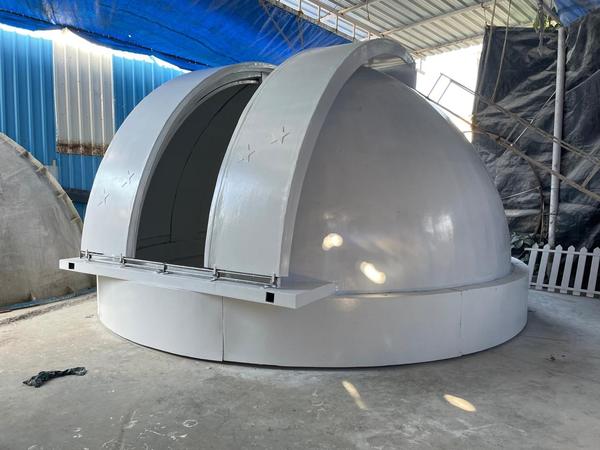
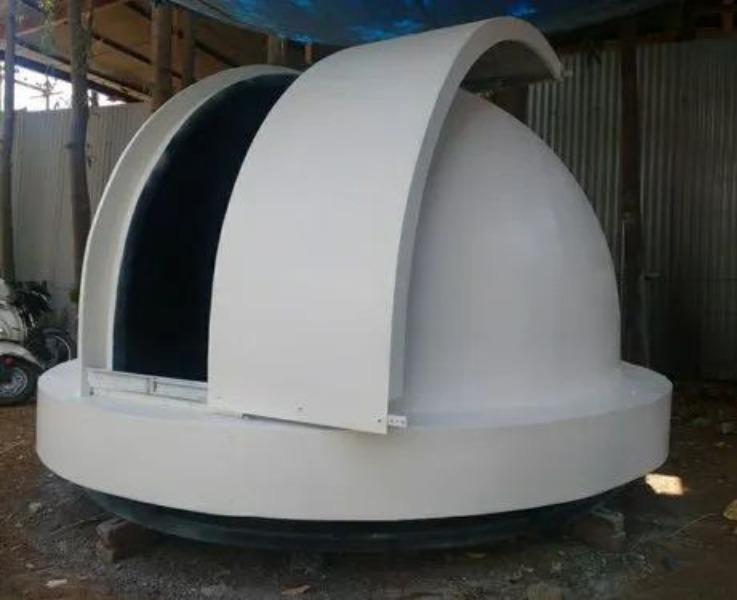
If you’re searching for “observatory domes,” you’re usually looking for one of two things: a way to protect a telescope from weather and dust, or a more precise structure that helps your equipment track the sky with less hassle. In Nashik—where you can get warm days, shifting humidity, and seasonal rains—choosing the right dome design matters more than many first-time buyers expect.
An observatory dome isn’t just a cover. It’s a carefully engineered system that influences how accurately your telescope points, how smoothly it moves, and how easily you can run observing sessions for students, researchers, or public programs.
Below is a practical guide to help you make better decisions—whether you’re building a new school observatory or upgrading an existing setup.
---
1) What an Observatory Dome Actually Does (Beyond Weather Protection)
Most people start with the obvious benefits: keeping rain, dust, and debris out. But modern observatory domes provide several functional advantages:
- Controlled sky access: The dome opening (“shutter” or “slit”) determines how much of the sky is visible at different angles.
- Stable thermal environment: Doms reduce wind exposure and help reduce rapid temperature swings that can affect image quality.
- Protection of optics and electronics: A sealed or semi-sealed enclosure helps protect sensitive components and improves equipment longevity.
- Operational convenience: A dome that rotates and opens correctly reduces manual setup time and supports repeatable observing routines.
In short: a dome is part of your telescope’s performance system, not just a storage shelter.
---
2) Dome Types: Manual vs. Motorized (And How to Choose)
When people browse observatory dome options, they typically see two broad categories: manual and motorized.
Manual domes
These are usually operated by hand for rotation and slit positioning. They can be a good fit when:
- You have limited budgets initially.
- You’re running shorter observing sessions.
- You don’t require rapid slewing or frequent automation.
Trade-off: Manual operation is slower and may be more demanding for groups—especially if students are assisting or if you run public viewing nights.
Motorized domes
Motorized domes rotate and control the shutter mechanism with engineered precision. They’re commonly preferred when:
- You want a smooth “push-button” style workflow.
- You run guided sessions frequently.
- You need better synchronization between dome position and telescope tracking.
Trade-off: Motorized systems require proper installation, cabling planning, and calibration.
If you’re building an educational observatory where multiple sessions happen each week, motorized operation is often the more practical path.
---
3) Key Engineering Features That Affect Performance
Not all domes behave the same under real observing conditions. When evaluating an observatory dome, focus on these performance drivers:
A) Rotation stability and smooth movement
Even small vibrations can matter during imaging. Look for designs that emphasize smooth rotation and controlled movement.
B) Dome opening design (slit width and alignment)
- A wider opening can improve sky access but may introduce more exposure to environmental conditions.
- Better alignment between the slit and telescope reduces “lost time” during tracking.
C) Weather sealing and internal airflow
A good dome reduces dust ingress and protects optics, but you also want airflow management that avoids excessive condensation.
D) Cable routing and equipment layout
Many domes fail operationally due to poor cable planning. Proper routing helps avoid snagging during rotation and reduces maintenance.
---
4) Motorized Auto-Tracking: How Dome + Telescope Work Together
Advanced observing setups often combine a telescope’s tracking system with the dome’s rotation and slit positioning. This is typically the real-world solution to a common problem:
Without dome synchronization, the telescope may track correctly while the dome slit drifts away from the target area.
The result: you keep stopping to reposition the dome, even if the mount is functioning well.
A synchronized system aims to:
- keep the dome slit aligned with the telescope’s pointing direction,
- reduce manual corrections,
- improve session reliability for students and staff.
If your observatory is intended for consistent public demonstrations or curriculum-linked observing, synchronization can significantly improve the user experience.
---
5) Site Planning for Nashik: Orientation, Access, and Ground Conditions
In Nashik (and anywhere with monsoon-like seasonal changes), the site isn’t an afterthought. Before finalizing a dome, consider:
A) Wind and rain exposure
- Place the structure to reduce direct wind exposure whenever possible.
- Plan drainage so water doesn’t pool around foundations.
B) Local horizon and obstructions
Trees, nearby buildings, and even tall boundary walls can block key sky regions. A dome can help manage equipment, but it can’t remove obstructions.
C) Power and network readiness
Motorized domes and tracking systems may require:
- reliable electrical supply,
- safe grounding and surge protection,
- optional network connectivity if remote control or logging is planned.
D) Maintenance access
You’ll want straightforward pathways for cleaning, inspection, and occasional repair. A well-planned access route reduces downtime.
---
6) Common Misconceptions When People Buy or Specify Observatory Domes
Let’s clear a few frequent misunderstandings:
- “A dome guarantees better images.”
A dome helps by stabilizing conditions and preventing contamination, but optical quality, mount performance, and calibration still drive image results.
- “Any dome will work with any telescope.”
Telescope geometry and weight distribution affect balance, clearance, and slit alignment. Compatibility must be designed in.
- “Motorization is only for advanced research.”
For schools and universities, motorization can improve consistency and reduce staff workload—especially during guided sessions.
- “We can upgrade later without design changes.”
Some upgrades require changes to mounting points, control wiring, foundation reinforcement, or airflow management. It’s usually easier to plan from the start.
---
7) Ideal Use Cases: Who Benefits Most from Observatory Domes?
Observatory domes are especially valuable when you need repeatability and protection:
- Schools (ICSE/CBSE-style programs):
Astronomy labs benefit when instruments are protected and sessions are easy to run with students.
- Universities and research clubs:
Doms support scheduled observation runs, instrument reliability, and improved workflow for imaging.
- Private institutions and astronomy clubs:
A dome encourages regular usage while keeping equipment safe during unpredictable weather.
In all these scenarios, the dome becomes a “launchpad” for learning—because it reduces friction between planning a session and actually running it.
---
8) Why High Precision Matters (Especially for Education)
Educational observing often involves:
- multiple users,
- frequent start/stop sessions,
- and sometimes last-minute adjustments during lessons.
A dome designed with precision reduces operational complexity. When slit alignment, rotation, and movement control are accurate, staff spend more time teaching and less time troubleshooting.
That’s where engineering details—like smooth motion, robust calibration approach, and correct integration with telescope control—make a measurable difference.
---
9) A Practical Next Step for Buyers in Nashik
If you’re considering a dome for an observatory project, prepare a short checklist before you compare options:
- What telescope/mount will you use (model or specifications)?
- Will it be visual observation, imaging, or both?
- Do you need manual operation now, or motorization for ongoing sessions?
- What’s the likely observing schedule (weekly sessions, public nights, classes)?
- Where will the dome be installed—what are the wind/rain and obstruction realities?
- Are you planning for future upgrades (automation, additional instruments)?
When you can answer these, choosing the right dome becomes far more straightforward.
---
Closing Thoughts
An observatory dome is a specialized piece of astronomy infrastructure. In Nashik, where seasonal weather can disrupt outdoor sessions, a well-designed dome supports consistent operation, better equipment protection, and smoother guided experiences. Whether you’re building a school observatory or enhancing a university setup, prioritize engineering compatibility and site planning early—so your telescope spends more time observing and less time waiting.
Keywords